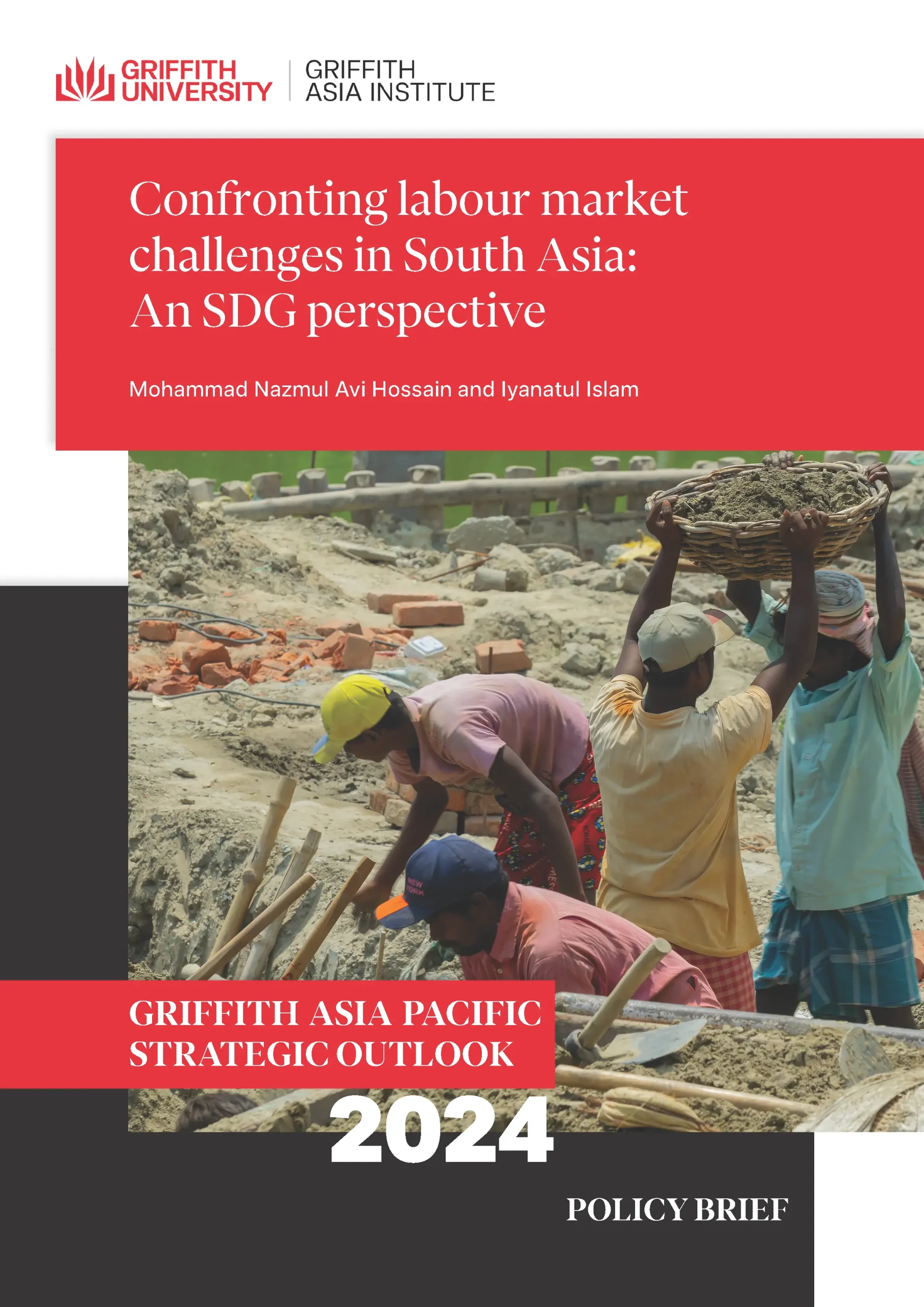


South Asia’s path to achieving the Sustainable Development Goals depends on overcoming deep-seated labor market vulnerabilities through inclusive employment policies, robust social protection, and equitable green transitions.
Executive Summary
South Asia presents a paradox of rapid economic growth coexisting with extreme poverty and lagging Sustainable Development Goal (SDG) progress. A primary barrier to achieving these global targets is the region’s complex labor market challenges, which are further compounded by climate change and rapid technological shifts.
Despite economic expansion, job creation fails to match labor force growth. The region suffers from staggering levels of informality, leading to widespread vulnerable employment, poor contracts, and weak labor rights. Compounding this is a large population of youth not in education, employment, or training (NEET), alongside significant gender disparities characterized by low female labor force participation, underrepresentation in management, and persistent pay gaps. Furthermore, stagnant or negative real wage growth, such as notable declines in Bangladesh, contributes to ongoing working poverty.
Social protection systems across South Asia remain inadequate. Governments allocate an average of less than one percent of GDP to social safety nets, falling well short of universal social protection floors and leaving vulnerable populations exposed to external shocks.
Compounding these traditional hurdles are emerging systemic risks. The transition to a green economy poses distinct regional challenges, particularly regarding the feasibility and infrastructure costs of electric vehicle adoption and clean energy investments. Simultaneously, digitization and automation threaten low-skilled workers, as seen in the displacement of manufacturing employees who lack advanced skill sets.
To overcome these barriers, the authors argue that relying solely on economic growth is insufficient. South Asian policymakers must commit to inclusive strategies centered on four key recommendations: formulating comprehensive National Employment Policies with robust implementation frameworks, scaling up budgetary allocations for social protection, modernizing labor inspection systems to ensure compliance with minimum wages and safety standards, and strengthening labor governance through active social dialogue.
This Policy Brief was published in 2024 in the Griffith Asia Pacific Strategic Outlook