

Without decent jobs, growth loses meaning
Bangladesh has recorded years of economic expansion, yet employment growth has not kept pace. Why has growth become so weak in generating jobs? How do you explain the low job elasticity of growth in Bangladesh? Which sectors are expanding without creating enough employment, and why?
In 2018, Jonathan Garber, the markets editor at Business Insider, wrote an article on Bangladesh as a ‘New Asian Tiger’, which attracted significant attention from researchers, policy-level practitioners, and other relevant personnel. The article highlighted the strength of Bangladesh in maintaining a high GDP growth rate, over 6 percentage points, for more than a decade.
In addition, political stability, stable macroeconomic performance, and geopolitical support were identified as positive confounding factors for the country. He also mentioned some limitations: a non-diverse export market, weak infrastructure, and an unstable financial market.
However, I argued in an article in the Daily Star in 2018 that a ‘New Asian Tiger’ without jobs for the unemployed, with youth struggling to get ‘decent’ jobs, and with a large underemployed workforce, is no different from a tiger without claws and sharp teeth.
Bangladesh’s labor market has not mirrored this expansion in terms of employment creation. Despite the headline economic progress, job growth remains sluggish, raising concerns among policymakers, economists, and researchers about the phenomenon of jobless growth.
The International Labor Organization (ILO) has extensively analyzed the global and regional patterns of jobless growth. In Bangladesh’s context, studies such as Rahman (2021), Ahmed & Saha (2023), and the ILO’s ‘World Employment and Social Outlook’ series highlight several key drivers for the weak employment elasticity of growth.
First, economic growth is often concentrated in sectors with high capital intensity and relatively low labor absorption. Second, structural bottlenecks, such as limited industrial diversification, persistent informality, and inadequate investment in labor-intensive industries, contribute to the disconnect.
ILO reports emphasize that Bangladesh’s labor force participation rate has remained stagnant, and the quality of employment (as measured by job security, wages, and benefits) has not improved in tandem with GDP growth, further complicating labor market challenges.
The RMG sector continues to dominate Bangladesh’s export earnings, but its employment growth has plateaued due to automation and productivity enhancements. Other sectors, such as finance, telecommunications, and construction, have expanded output but have not significantly increased labor demand. The agriculture sector, which still employs a large share of the workforce, is experiencing structural shifts and mechanization, reducing its capacity to generate new jobs.
Some key labor-market and economic features of the country can be explained by Bangladesh’s ongoing high employment intensity in low-productive sectors. The country’s economic base is shifting from agriculture, which now accounts for only 11 percent of GDP, toward greater industrialization and service orientation, with these sectors accounting for 38 percent and 51 percent of the economy, respectively.
Despite agriculture’s reduced share of GDP, it continues to employ 45-50% of the working-age population. Conversely, the service and industrial sectors employ 38-42%. And the manufacturing sector accounts for 17-20 percent of employment. This clearly demonstrates why Bangladesh, despite its economic growth, is not producing many jobs.
The 2024 Bangladesh Labor Force Survey reveals that while labor force participation remains steady at around 58%, the unemployment rate among educated youth has increased to 11%.
Employment growth is concentrated in informal, low-wage activities, with formal job creation lagging. The survey indicates that job growth is especially weak in urban areas and among women. The share of workers in vulnerable employment, such as unpaid family work and informal self-employment, remains high.
The evidence from labor economics literature, ILO reports, and the 2024 Labor Force Survey converges on several key reasons for Bangladesh’s weak job creation: growth is concentrated in capital-intensive or technology-driven sectors with low labor absorption; industrial diversification is limited, restricting opportunities in new and labor-intensive industries; pervasive informality impedes formal job creation and limits productivity gains; structural bottlenecks, including energy constraints and limited private investment, inhibit expansion in sectors that could generate more jobs; labor market mismatches, particularly among educated youth, reflect gaps between education and employer needs.
But I would emphasize another important point, which is often less discussed. We are a country that has been enjoying the benefits of cheap labor in RMG and easy money from migrant workers, without making any effort to enter the high-skilled product value chain in RMG, to create high-skilled jobs, or to send skilled workers abroad.
Since we are already earning a lot of export revenue without taking any instrumental initiative or effort, we do not want to change this ‘comfort zone’ and would rather ‘do nothing’ and maintain the business-as-usual scenario. It is the right time to start some radical changes in this political mindset.
And yes, conference, workshop, speeches, and this interview will not solve any problems. We need to invest in new ideas and generate businesses that engage youth.
To what extent are structural bottlenecks, such as weak industrial diversification, informality, energy constraints, and limited private investment, holding back job creation?
First, weak industrial diversification is a major constraint; the economy remains heavily reliant on a few sectors. This lack of diversification restricts the emergence of labor-intensive industries, limiting both the quantity and quality of jobs.
Informality is pervasive, with the 2024 Bangladesh Labor Force Survey showing employment growth concentrated in informal, low-wage activities. Informal jobs typically lack security, benefits, and career advancement, and their prevalence undermines productivity gains and formal job creation.
Energy constraints further hamper industrial expansion. Many factories and businesses face unreliable power supply and high energy costs, discouraging investment in new or expanded operations. This k is a critical factor in the slow growth of labor-intensive manufacturing and technology sectors, which require stable and affordable energy to thrive.
Limited private investment compounds these challenges. Bangladesh has one of the lowest private-sector investment ratios as a share of GDP among countries with similar economic profiles, and even lower than that of Bangladesh.
Regulatory uncertainty, inadequate infrastructure, and restricted access to finance deter both domestic and foreign investors from venturing into new industries or scaling existing operations. As a result, job creation is weak, especially in urban areas and among women, while formal job opportunities lag demand.
The macroeconomic context reflects these constraints: despite steady labor force participation (around 58%), the unemployment rate among educated youth has risen to 11%.
Unless Bangladesh undertakes radical reforms to address these structural bottlenecks, job creation will remain sluggish.
I emphasize a ‘3 R‘ approach:
Research for evidence: Labor market evidence-based research initiatives need to be increased, supported, and financed by employers/private sector in collaboration with academia and research organizations.
In Bangladesh, we often pretend to know everything and do not give importance to data-crunching research to learn what’s going right and what’s not working very well, and then we end up mirroring project after project in implementing initiatives that barely deliver results.
We duplicate projects year after year with little evidence. And we have to get out of the idea that research can only take place in the UN and Development organizational space that may often be a case a ‘market failure’ as the research commissioned by the development partners are often very specific with an agenda to promote their projects that sometimes may shadow the weaknesses and fragility which may have more importance for policy makers, government, investors and private sectors compared to the successful cases.
Radical initiatives through active labor market programs: Radical initiatives such as mandatory internship programs in public and private entities for students, lasting 3-6 months and offering partial wage/salary, should be co-financed by the government and the private sector through a public-private partnership (PPP).
Radical initiatives to create mega government projects to provide jobs on a rotating basis, and employment-intensive investment programs (EIIPs) should be undertaken every three years.
Re-design the employment agenda: The labor ministry in Bangladesh remains a ministry focused solely on labor issues, such as labor law, labor unrest, and labor courts, supported by the ILO. There is no employment department in the ministry.
A national employment policy (NEP) was formulated and adopted in 2022, which was an extremely weak policy that mirrored Bangladesh’s skills development policy. That was never implemented, so the starting point of this ‘R’ for re-design should immediately be re-designing the employment and labor nexus in the government and re-drafting the NEP.
What social and political risks emerge when educated youth face prolonged joblessness or are forced into low-quality work? Could this become a threat to long-term social stability?
To answer this question, let me refer to one of my articles that was published in the Financial Express in 2024, right after the July revolution. Initially, the protestors targeted a ‘provocative’ job-reservation scheme in the public sector jobs that disproportionately favored the descendants of the freedom fighters of the Bangladesh Liberation War.
In practice, the country’s youth believed that this scheme was indeed a political tool to induce partisans into the bureaucracy.
When do the country’s youth rely heavily on public jobs? Why is the demand for public jobs so high? This shows the discriminatory nature of the ‘Quota’ system, which objectively promotes a ‘non-meritocratic’ approach in selecting the country’s future administrators and leaders.
The problem stems from two key factors: first, the limited availability of formal employment opportunities in the private sector; and second, the dearth of ‘decent jobs’ that offer job security, consistent income, competitive salaries, social security benefits, and clear career progression paths.
The attractiveness of government positions was notably enhanced by the previous administration through a revision to the salary structure, particularly in entry-level grades such as 9th. These grades have become prime targets for recent graduates seeking public-sector employment because the revised salary packages surpass average market wages and reasonable private-sector salaries.
However, the presence of schemes and a ‘quota’ system has hindered the entry of candidates solely based on merit. This discontent culminated in significant youth protests, culminating in a regime-change uprising.
The country’s youth probably did not study the data, facts, and figures as part of their protest. However, if one does backward induction and takes a deep dive into labor-market indicators for youth, it becomes easier to connect the dots. The youth movement that started for jobs and discrimination in employment opportunities, eventually widened its wings towards freedom of speech, right to speak, political rights, political oppression, authoritarianism, ‘extractive state-sponsored institutions’, and personnel.
These topics are also well supported by empirical evidence in the literature and in the works of Acemoglu and Robinson, who just won the Nobel Prize in economics.
According to the United Nations (2003) and the ILO (2006), youth in general are highly vulnerable to labor-market marginalization, as they lack skills, work experience, job-search skills, and financial resources. It is common knowledge that, even under normal economic circumstances, firms do not prefer hiring inexperienced young people and are less interested in investing in their training.
Hence, the youth may become demotivated, excluding them from the labor force, which will result in lower well-being (Daly & Delany, 2013) and a higher likelihood of their involvement in criminal activities (Bell et al., 2014).
Looking ahead, which job markets or sectors are most likely to expand in Bangladesh over the next decade, and which traditional forms of employment may stagnate or decline?
Bangladesh’s economy is poised for significant transformation, with several sectors expected to expand while others are likely to stagnate or decline. The ready-made garments (RMG) industry, which currently accounts for over 80% of Bangladesh’s export earnings and employs more than 4 million workers, is projected to remain a key growth driver, though automation and global competition may temper its employment growth.
The IT and digital services sector is anticipated to expand rapidly; government initiatives such as ‘Digital Bangladesh’ have spurred investment and skills development, with the ICT sector growing at an average annual rate of 40% and employing over 300,000 people as of 2024.
Other promising sectors include pharmaceuticals, agro-processing, and renewable energy. The pharmaceutical industry has seen exports rise to nearly $200 million in 2023, supported by government incentives and global demand for affordable medicines.
Agro-processing is gaining traction due to Bangladesh’s large agricultural base and rising domestic consumption. Renewable energy, particularly solar power, is expanding with government targets to generate 10% of electricity from renewables by 2030, encouraging job creation in installation, maintenance, and manufacturing.
Conversely, traditional agriculture and low-skilled manufacturing are stagnating or declining. Agriculture’s share of GDP has dropped from 19% in 2010 to below 12% in 2024, with rural employment shifting toward services and industry.
Low-skilled manufacturing jobs are increasingly threatened by automation, rising labor costs, and shifting global supply chains. Government and private-sector reports indicate that sectors dependent on manual labor, such as traditional textiles and small-scale retail, may not keep pace with the economic shift toward technology-driven, export-oriented industries.
Bangladesh’s job market over the next decade needs to be shaped by growth in digital services, high-value manufacturing, pharmaceuticals, agro-processing, and renewable energy. Policymakers and educators must focus on upskilling youth and aligning training programs with these emerging sectors to ensure sustainable employment and social stability.
And after the LDC graduation, we will barely have a chance to fix some of the elementary labor-market problems we haven’t been able to solve for at least two decades.
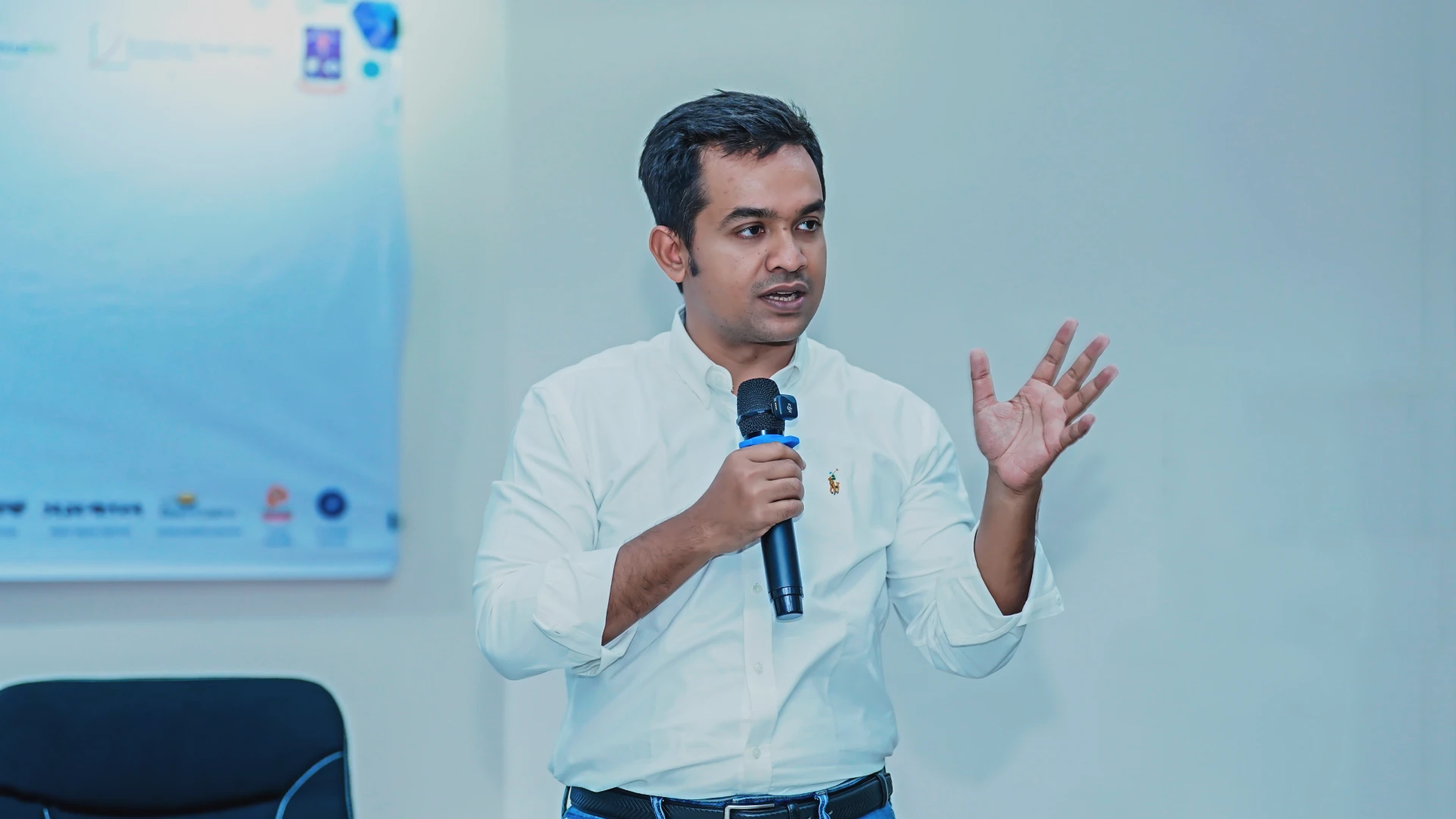
To understand the roots of Bangladesh’s jobless-growth challenge, the risks facing educated youth, and the reforms needed in skills, industrial policy, and labor-market governance, Mohammad Saiful Islam spoke with labor economist Mohammad Avi Hossain for Industry Insider. This blog was published on the magazine’s website on 24th of May, 2026.